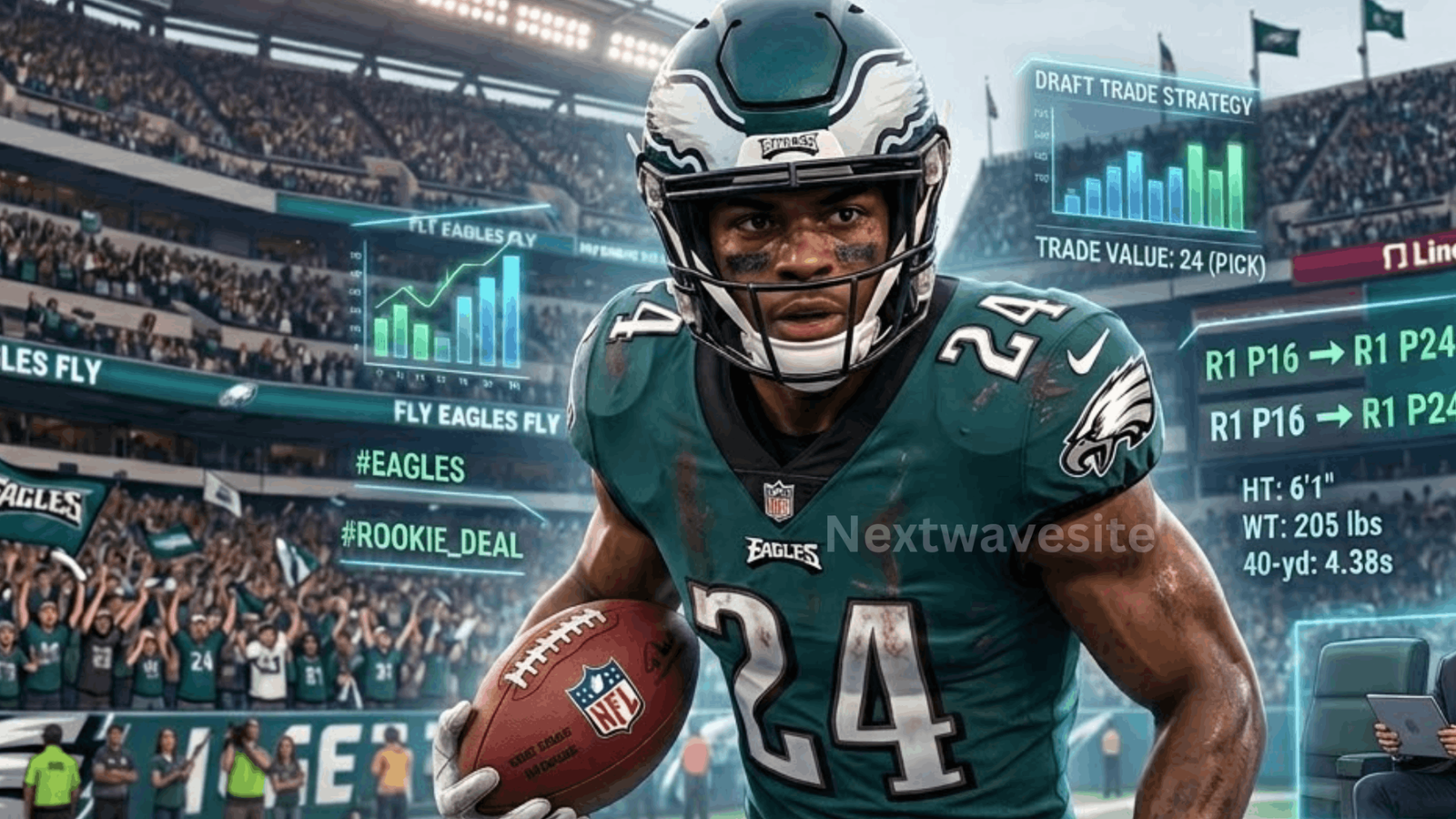
The Eagles’ rookie trade attempt quickly became one of the most talked-about moves for the Philadelphia Eagles. This wasn’t just another rumour during the NFL Draft. It revealed how the Eagles think, plan, and take calculated risks to build a winning team.
Fans saw flashes of trades, whispers about targets, and excitement surrounding a potential rookie acquisition. But behind the headlines lay a detailed strategy, hours of scouting, and leadership decisions designed to improve the team immediately while also thinking long-term.
In this article, we will take you step by step through the Eagles’ rookie trade attempt, explain why it happened, and show what it means for the team’s future.
Understanding the Eagles’ Rookie Trade Attempt
The Eagles’ rookie trade attempt is a deliberate move to acquire a specific rookie player by trading draft picks or other assets. Unlike standard draft selections, where a team waits for their turn and selects the best available player, the Eagles wanted control. They wanted a particular player who could make an immediate impact and fit their system perfectly.
This type of move demonstrates the team’s front office’s confidence and decisiveness. It demonstrates that the Eagles do not wait for opportunities—they create them.
Why the Eagles Made This Move
Every NFL trade has a purpose. For the Eagles, several factors combined to push them toward this bold decision.
1. They Saw a Perfect Fit
The Eagles identified a rookie who could immediately improve their roster. Whether on offence or defence, this player matched their style of play, team philosophy, and long-term vision.
Finding a perfect fit in the draft is rare. When a team identifies such talent, hesitation could mean losing the player to another team. The Eagles acted decisively to prevent that.
2. They Trusted Their Scouting
Months before the draft, the Eagles’ scouts studied prospects tirelessly. They analyzed game tape, performance metrics, athletic traits, and character. When the front office targeted this rookie, it was the result of confidence built on hard evidence and experience.
Trust in scouting allows teams to act boldly. Without this trust, teams would hesitate to trade multiple picks or assets for a single rookie.
3. They Wanted Control Over the Draft
Draft day is unpredictable. Every team watches the board and reacts in real-time. The Eagles did not want to gamble that another team would pick their desired player first.
By attempting the trade, they took control instead of leaving it to chance. This aggressive approach reflects a front-office mindset focused on results rather than simply following the process.
How the Eagles Developed Their Strategy
The Eagles carefully built their strategy, combining preparation, analysis, and flexibility.
Step 1: Analyze the Roster
They started by reviewing their current team. Coaches and executives asked questions like:
- Which positions need immediate improvement?
- Where do we lack depth?
- Which player types fit our schemes best?
This step ensures that every potential draft move aligns with the team’s needs.
Step 2: Evaluate Prospects
Next, the Eagles studied draft prospects in detail. They compiled a shortlist of rookies who aligned with the team’s system. These players were not just talented—they had versatility, intelligence, and the potential to grow into leaders.
Step 3: Build Trade Scenarios
After identifying targets, the Eagles planned possible trades. They considered:
- Moving up in the draft
- Offering future picks
- Trading current roster players
Having multiple plans ensured they could act quickly, regardless of what other teams did.
Step 4: Prepare for Execution
Draft day moves fast. Decisions must happen in minutes. The Eagles’ preparation allowed them to negotiate and respond quickly, keeping their target in reach.
Modern NFL Draft Strategy in Action
The Eagles’ rookie trade attempt reflects how the NFL has evolved. Teams no longer rely solely on luck—they plan, act, and shape outcomes.
Precision Over Randomness
The Eagles targeted a player for a specific reason. They were not picking based on reputation alone—they wanted someone who fit their system perfectly.
Data-Driven Decisions
Analytics guided their decisions. Draft value charts, performance metrics, and scouting reports helped determine whether a trade offered a fair return.
Speed and Flexibility
During the draft, timing is everything. A team can move a pick or lose a player in seconds. The Eagles prepared for multiple scenarios and adapted as the draft unfolded.
Step-by-Step: How Rookie Trades Work
Many fans don’t realize how complex these trades are. The Eagles’ attempt followed a clear process.
- Target Selection: Identify a player who meets the team’s immediate and long-term needs.
- Draft Value Evaluation: Measure the cost of the trade using pick value charts.
- Contact Other Teams: Open negotiations with teams holding the desired picks.
- Negotiate Terms: Discuss trades, offers, and counteroffers.
- Execute Quickly: Complete the trade before competitors act.
Each step involves scouts, analysts, and executives working together seamlessly.
Leadership Drives Bold Decisions
The Eagles rely on strong leadership to make these moves successful. Howie Roseman leads the front office with a clear vision. He combines bold decision-making with careful planning.
His philosophy encourages calculated risk-taking. Every trade, every draft pick, and every move is measured, deliberate, and backed by data.
Risk vs Reward
Every rookie trade carries risk. The Eagles knew this.
Risks:
- Losing valuable draft picks
- Overpaying for one player
- Missing other opportunities
Rewards:
- Securing a high-impact rookie
- Strengthening the roster immediately
- Gaining a competitive edge
The front office weighed these factors carefully before taking action.
Timing Is Everything
Draft day is intense. Teams act in minutes, and a single decision can change everything.
The Eagles moved decisively to avoid losing their target. Acting too slowly could have meant watching another team select the player they wanted.
Competition Influenced the Outcome
The Eagles were not alone in seeking top talent; rival teams were also eyeing the same players.
When multiple teams pursue a player:
- The trade value rises
- Negotiations become more complex
- Deals can collapse quickly
The Eagles had to compete aggressively to maintain a chance at their target.
Impact on the Current Roster
Even if the trade didn’t go exactly as planned, the attempt still influences the team.
- Pressure on Players: Current roster players must perform at a higher level.
- Coaching Adjustments: Coaches tweak strategies based on available talent.
- Future Draft Planning: The front office adapts for the next draft.
Long-Term Effects on the Eagles
This move affects the franchise well beyond a single draft.
- Team Identity: The Eagles reinforce their reputation as aggressive, confident, and forward-thinking.
- Strategic Experience: Every trade attempt sharpens future decision-making.
- League Awareness: Other teams know the Eagles act decisively, which influences future negotiations.
The Emotional Side for Fans
Fans experience excitement and anxiety during these moments. They:
- Follow rumors closely
- Analyze trade possibilities
- Hope for a future star
This connection makes the draft one of the most thrilling events in football.
Final Thoughts
The Eagles’ rookie trade attempt is more than a draft story. It represents:
- Smart decision-making
- Confidence in scouting
- A willingness to take calculated risks
Even if the trade fails, the process shows the Eagles’ vision and ambition. They do not wait for opportunities—they create them.
This move gives fans a window into how elite NFL teams operate, balancing strategy, preparation, and bold action.
You may also like to read About: AC Milan vs SSC Bari Rivalry
About the Author